
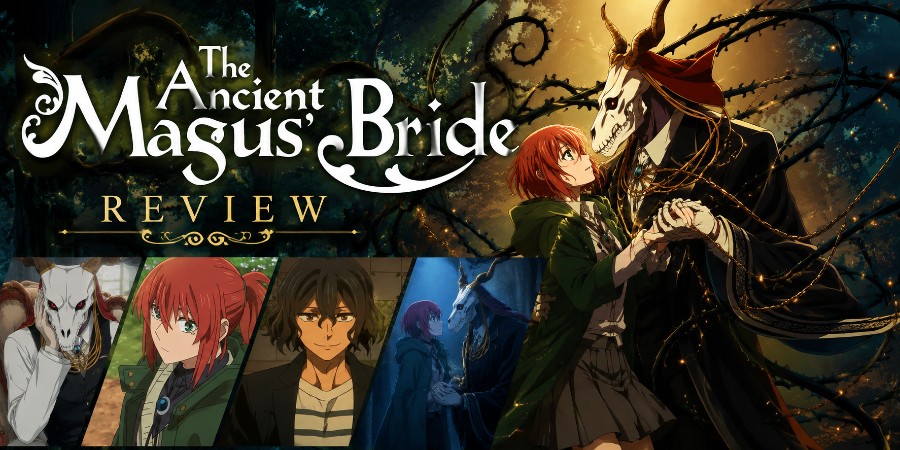
Some anime make it very easy to recommend them. You can explain the premise, point out the gorgeous animation, mention a lovable character or two, and send people on their way.
The Ancient Magus Bride is not one of those anime.
This is a series where the initial setup can make you pause almost immediately. Elias, an ancient and very nonhuman mage, literally buys Chise at an auction. He makes her his apprentice and announces that she will eventually become his bride. There’s a huge age gap, a teacher-student dynamic, and the small issue of him being a giant skull-headed monster who understands almost nothing about normal human relationships.
There is absolutely some ick here. I’m not going to pretend there isn’t.
But I also think people are missing out if they let that discomfort stop them from watching Season 1 entirely, because underneath the strange fantasy-romance premise is an incredible story about loneliness, trauma, belonging, and two emotionally stunted people slowly learning how to care for each other.
Quick Verdict: The Ancient Magus Bride Season 1 is a beautiful, emotionally heavy fantasy romance with complicated relationship dynamics, tragic backstories, and some genuinely wonderful character growth. The premise may be uncomfortable for some viewers, but the emotional payoff was completely worth it for me.
Rating: 8.5/10
Stream or Skip? Stream Season 1. Season 2 is a much more complicated recommendation.
What Is The Ancient Magus Bride About?
Chise Hatori is a teenage girl who has spent most of her life feeling unwanted, isolated, and overwhelmed by supernatural things other people cannot see. At the beginning of the series, she has reached such a low point that she allows herself to be sold at an auction.
That is where Elias Ainsworth finds her.
Elias is a powerful mage with a monstrous appearance and a very limited understanding of human emotions. He purchases Chise, takes her to his home, and begins teaching her about magic. He also informs her that she is meant to become his bride, which is where a lot of viewers understandably start backing away from the screen.
I get it. I really do.
A friend of mine is an actual teacher, and I can completely understand why this relationship would be especially off-putting to someone who spends their life thinking about real-world teacher-student boundaries. If you view Elias and Chise entirely through a realistic modern lens, the setup is difficult to defend.
But The Ancient Magus Bride is not a realistic slice-of-life romance. This is a fantasy world full of mages, fae, ancient creatures, curses, dragons, magical apprenticeships, and beings who experience time and relationships very differently from humans. That does not erase the uncomfortable parts, but it does change the context surrounding them.
The Relationship Is Stranger and More Complicated Than It First Appears
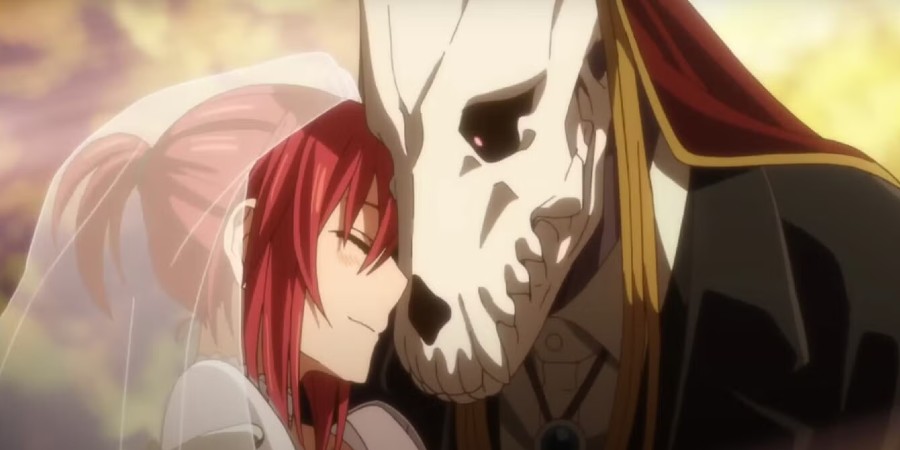
At first, Elias appears to hold all the power. He is older, more experienced with magic, and responsible for teaching Chise. She is emotionally vulnerable and has very little sense of her own worth. It would have been easy for the series to leave their dynamic there, and honestly, that version of the story probably would have lost me.
Instead, Season 1 gradually reveals that Elias is deeply immature in ways Chise is not.
He understands magic, but he does not understand people. He struggles with empathy, jealousy, fear, attachment, and even the basic idea that another person can have needs separate from his own. Chise eventually reaches a point where she realizes that Elias is still almost like a child emotionally. She may be his magical apprentice, but when it comes to humanity, connection, and feelings, he is learning from her too.
That mutual dependence makes their relationship much more interesting than a simple teacher falling in love with a student. They are both damaged. They are both lonely. They both make terrible decisions because they do not know how to communicate. And they both have to learn that loving someone does not mean owning them, controlling them, or destroying yourself for them.
That does not mean every uncomfortable element disappears. It means the anime is aware that this relationship is emotionally messy, and it allows Chise to grow into someone who can challenge Elias instead of simply following him.
Chise’s Growth Is the Real Heart of Season 1
Chise begins the series believing her life has almost no value. She is willing to disappear into someone else’s world because she does not have a reason to protect herself. Even after she begins experiencing warmth, friendship, and wonder, she keeps treating her own body like it is disposable.
Her growth is not just about becoming more powerful. It is about learning that she deserves to exist.
That is what made her development hit so hard for me. Chise does not suddenly become confident because someone tells her she is special. Her progress is slow, painful, and inconsistent. She still makes self-destructive choices. She still struggles to imagine a future for herself. But she gradually forms bonds that force her to confront how much her life matters to other people.
By the end of Season 1, she is not the same passive girl Elias brought home. She is more willing to speak, make choices, push back, and demand that their relationship become something healthier. Her growth feels earned because it comes through grief, conflict, mistakes, and moments where both she and Elias fail each other.
This is one of the biggest reasons the series scratched that Fruits Basket itch for me.
Why The Ancient Magus Bride Feels Like Fruits Basket
Nothing will ever fully replace Fruits Basket for me. That is a very high emotional bar. But The Ancient Magus Bride comes closer than most series have in a long time.
Nearly every important character seems to be carrying some kind of grief, regret, abandonment, or tragic history. The anime introduces magical creatures and beautiful fantasy concepts, but it keeps circling back to very human pain. People want to be loved. They are afraid of being left. They hurt others because they have never learned how to handle their own hurt.
There are scenes that are devastating, followed by moments so gentle and hopeful that they also make you want to cry. That particular combination of sadness and healing is something Fruits Basket does incredibly well, and The Ancient Magus Bride gave me a similar emotional release.
There was even a tiny background-character moment where I immediately recognized the English dub voice associated with Kyo, which made me laugh because I was already sitting there thinking about how much the show reminded me of Fruits Basket. It was not a major role or important casting moment. It was just one of those instant fandom reactions where your brain goes, “Oh my God, that’s Kyo.”
Ruth Is the Best Character, and I Will Not Be Taking Questions
Ruth was easily my favorite character.
He is loyal, emotionally grounded, protective without becoming unbearable, and one of the most comforting presences in the series. His bond with Chise adds so much to the story because it feels different from her relationship with Elias. There is a steadiness to Ruth that Chise desperately needs.
Also, I spent an unreasonable amount of time salivating over Ruth because Austin Tindle voices him in the English dub.
Austin Tindle also voices Obi in Snow White with the Red Hair, and apparently my brain has decided that voice automatically equals emotional attachment. Ruth could walk into a scene, say almost anything, and I was already listening with my full attention.
The English dub in general worked really well for me, but Ruth’s voice added an extra layer of appeal that I am not even going to pretend was objective criticism. Sometimes you love a character because of their writing. Sometimes you love them because a voice actor unlocked a very specific part of your anime-fan brain. Both are valid.
This Is for InuYasha and Kamisama Kiss Fans Too
Viewers who enjoy fantasy romances like InuYasha or Kamisama Kiss will probably have an easier time adjusting to the relationship in The Ancient Magus Bride.
Those stories also involve supernatural love interests, huge age differences, uneven power dynamics, and relationships that would make very little sense under normal real-world rules. We accept those romances because they belong to a world where demons, gods, curses, reincarnation, and magical bonds are part of the emotional language.
The Ancient Magus Bride operates in a similar space, although it is often slower, darker, and more focused on trauma. It is less about cute romantic payoff and more about two beings trying to understand what love is supposed to look like when neither of them has experienced it in a healthy way.
That makes the romance frustrating at times, but it also gives the emotional development real weight.
The Magic, Monsters, and Tragic Side Stories Matter
One of the best things about Season 1 is that the world never feels like a simple backdrop for the romance. The magical problems Chise and Elias encounter often reflect the same emotional themes the main characters are dealing with: grief, obsession, loneliness, sacrifice, and the inability to let go.
The side stories are not just random magical errands. Many of them reveal something about Chise, Elias, or the kind of person Chise could become. Even smaller characters receive enough emotional depth to make their pain matter.
The atmosphere is also gorgeous. The series can feel cozy and eerie at the same time. Elias’s home offers warmth, food, safety, and the possibility of belonging, while the magical world surrounding it constantly reminds Chise that beauty can be dangerous. The fae are enchanting, but they are not necessarily kind. Magic can heal, but it can also consume people.
That balance between comfort and danger is a huge part of what makes the series so emotionally addictive.
Should You Watch Season 2?
This is where my recommendation gets complicated.
I loved Season 1. I finished it feeling emotionally satisfied, impressed by Chise’s growth, and completely invested in the world and characters. I could absolutely see myself watching it again when I am in the mood for something magical, tragic, and strangely comforting.
Then I started Season 2, and it felt like something had shifted.
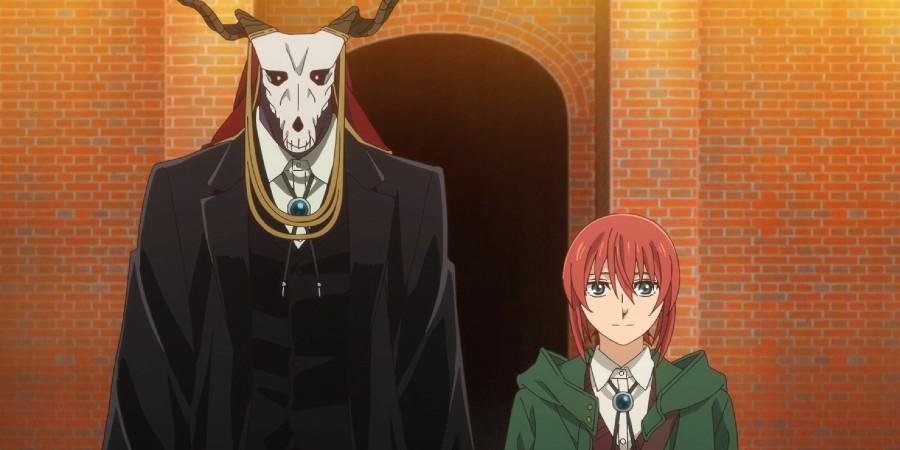
I only watched a few episodes, so I am not reviewing the entire second season or saying it never becomes worthwhile. But the move into a magical school setting made it feel like I was watching a different series. It became much more of a school-based slice-of-life story, and that was not what I loved about The Ancient Magus Bride.
The intimate, fairy-tale atmosphere of Season 1 felt less immediate. The emotional focus changed. I simply could not get into it.
At this point, I almost think viewers could watch Season 1 and stop there. It works as a meaningful emotional experience on its own, and I do not currently feel any urgency to continue. Maybe I will return to Season 2 someday. Maybe I will not. For now, Season 1 is the version of this anime I want to remember.
Final Verdict: Stream or Skip?
Stream Season 1.
The uncomfortable parts of the premise are real, and viewers who cannot get past the purchase, apprenticeship, age gap, or teacher-student implications may never feel comfortable with the central relationship. That is fair.
But viewers who enjoy emotionally complicated fantasy romances should not dismiss the series without giving it a chance. The Ancient Magus Bride delivers beautiful atmosphere, heartbreaking character histories, meaningful magical storylines, and some incredible growth from Chise.
It is especially worth trying for fans of Fruits Basket, InuYasha, Kamisama Kiss, and Snow White with the Red Hair. It has the supernatural romance and strange age-gap logic of the first two, the emotional wounds and healing of Fruits Basket, and, thanks to Ruth’s English dub voice, a little extra treat for those of us who are already attached to Obi.
Season 1 earns an 8.5/10 from me. It is messy, beautiful, occasionally uncomfortable, and much more emotionally thoughtful than its initial premise suggests.
And Ruth is perfect. Obviously.
Leave a Reply