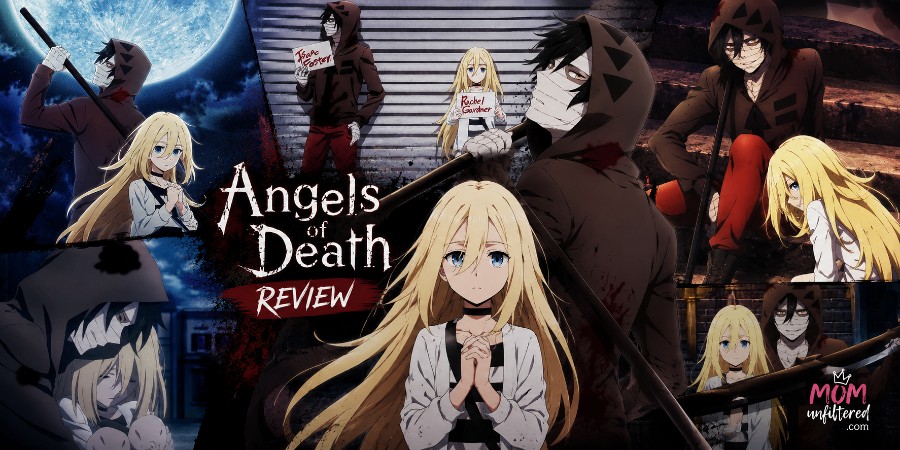
Angels of Death Review: What the Hell Did I Just Watch?
Some anime are easy to explain. Angels of Death is not one of them.
This is one of those shows I binged quickly and then sat there afterward like, “Was that actually really good, or did I just watch a slow-moving psychological horror trainwreck I couldn’t look away from?” Honestly, maybe both.
As someone who doesn’t usually watch horror anime, I was surprised by how much this one pulled me in. It’s dark, weird, funny in a very messed-up way, and built around one of the strangest character dynamics I’ve ever accidentally rooted for.
Quick Verdict
- Score: 8/10
- Episodes: 16
- Genre: Psychological Horror, Mystery, Thriller
- Watch If: You enjoy dark mysteries, twisted character dynamics, psychological horror, and binge-worthy anime that constantly make you say “wtf?”
- Skip If: You need airtight logic, realistic psychology, or horror that takes itself completely seriously.
What Is Angels of Death About?
The basic premise sounds insane because, well, it is.
Rachel Gardner wants to die. Isaac “Zack” Foster is a serial killer who wants to escape the bizarre murder house they’re trapped inside. The two strike a deal: they’ll work together to escape, and once they’re free, Zack will kill Rachel.
That’s the foundation of the entire series.
And somehow it works.
The anime follows Zack and Rachel as they move through different floors of the building, encountering increasingly disturbed individuals who somehow make the situation even stranger than it already is.
Every floor introduces another person who made me stop and think, “What is wrong with everyone in this building?”
Yet despite how ridiculous the setup sounds, the mystery keeps pulling you forward.
The Real Reason This Anime Works
The horror isn’t actually what kept me watching.
The mystery helped. The twists helped. The bizarre world definitely helped.
But the real reason I kept watching was Zack and Rachel.
On paper, their relationship should not work.
One is a serial killer. The other actively wants to die. Their partnership begins with a murder agreement.
Yet over the course of the series, their dynamic slowly evolves into something much more complicated.
At times it almost feels like a strange big brother and little sister relationship. They challenge each other, depend on each other, and develop a level of trust that feels impossible given the circumstances.
The funniest part is how the show constantly makes you forget the original arrangement.
There is a point later in the series where Rachel is in serious danger, and my immediate reaction wasn’t, “Well, she’s doomed.”
It was: “Wait… isn’t Zack supposed to kill her later?”
Somehow the show gets you emotionally invested in preserving a promise that involves murder.
That’s not a sentence I expected to write.
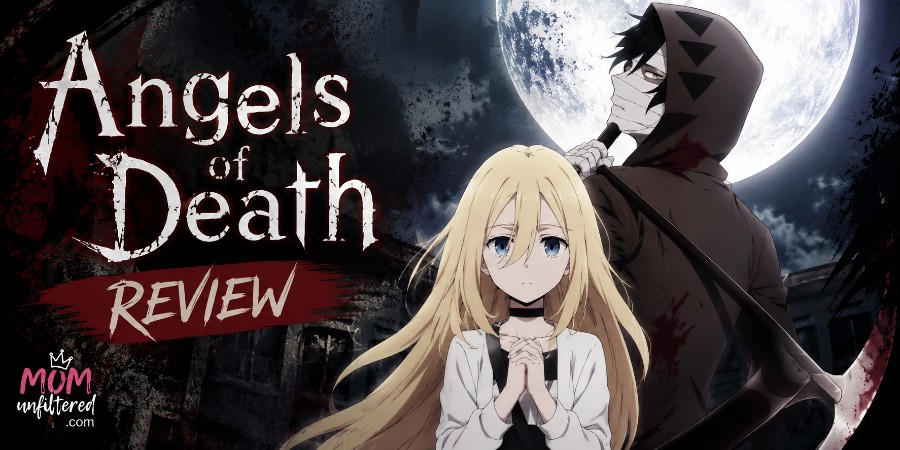
Zack Shouldn’t Be This Likeable
I genuinely don’t know how this anime pulled this off.
Zack is a psychopath. He’s a serial killer. He’s violent, unstable, and objectively a terrible person.
And yet he’s also easily my favorite character in the entire series.
The show somehow manages to make him weirdly lovable despite everything he represents.
You root for him.
You feel bad for him.
You learn more about him and start understanding why he became who he is.
His backstory was one of the strongest parts of the entire anime for me. It doesn’t excuse his actions, but it adds emotional weight to a character who could have easily been reduced to nothing more than an edgy horror archetype.
By the end of the series, I cared far more about Zack than I ever expected to.
Which is honestly one of the biggest accomplishments of the show.
Rachel Is Frustrating… Until She Isn’t
Rachel was a tougher character for me.
For a good chunk of the series, I found her frustrating.
She’s incredibly depressing, emotionally detached, and honestly kind of creepy.
But the further the story progresses, the more the pieces start coming together.
The reveal surrounding Rachel’s past completely changed how I viewed her character.
It’s one of those twists that suddenly reframes everything you’ve been watching.
I won’t spoil it here, but it was absolutely one of those moments that made me sit back and go:
“Wait. What?”
In the best possible way.
The Supporting Cast Is Completely Unhinged
The supporting cast ranges from entertainingly weird to aggressively irritating.
Danny immediately triggered every possible danger alarm in my brain. The man’s obsession with eyeballs is nightmare fuel, and his fixation on Rachel only made him creepier.
My biggest question throughout his entire storyline was simple: How are you still alive?
Eddie felt more tragic than threatening. He had major lost-child energy and sometimes became repetitive, but he also brought some unexpected humor to the story and helped develop the Zack and Rachel dynamic.
Cathy was easily my least favorite character. I found her conceited, annoying, and honestly exhausting. Her storyline never clicked for me the way the others did.
Then there’s Gray, who somehow ended up feeling like the closest thing this murder building had to a normal person.
At several points I found myself wondering if he was literally the only decent human being in the entire place.
Which says a lot about the cast.
Dark Humor Carries A Lot Of The Show
One thing I don’t see discussed enough is how funny Angels of Death can be.
Not funny in a traditional comedy sense.
Funny in a “this situation is so absurd that I can’t believe it’s happening” kind of way.
The series constantly balances horror, tension, mystery, and dark comedy.
That balance is probably one of the reasons it worked so well for me despite not usually being a horror anime fan.
The show understands that sixteen episodes of nonstop misery would be exhausting.
Instead, it regularly gives you moments where you’re laughing at the sheer insanity of what’s unfolding.
That dark humor makes the heavier emotional moments hit even harder.
The Story Doesn’t Always Make Sense — And That’s Okay
If you’re looking for airtight logic, this may not be the anime for you.
There were multiple points where I had absolutely no idea who was dead, who was alive, and who had somehow returned after looking extremely dead.
The entire building operates on what I can only describe as nightmare logic.
Sometimes things happen because they’re emotionally effective rather than because they’re realistic.
Oddly enough, I didn’t mind.
Because while the mechanics occasionally felt messy, the emotional journey remained surprisingly strong.
The show succeeds more through atmosphere, mystery, and character relationships than strict realism.
The Ending
One of my favorite things about Angels of Death is that it actually tells a complete story.
Sixteen episodes. Beginning. Middle. End.
No waiting years for another season.
No massive cliffhanger designed to sell manga volumes.
An actual ending.
Even better, it’s an ending that’s open to interpretation.
There are multiple ways to read what happened, and I genuinely love that.
Rather than spelling everything out, the series trusts viewers to decide what they believe.
For a story built around uncertainty and complicated emotions, it feels fitting.
Final Verdict
Angels of Death is one of the strangest anime I’ve ever watched.
It’s dark, messy, creepy, emotional, funny, frustrating, and surprisingly heartfelt.
I still can’t decide whether it’s a hidden gem or a beautifully entertaining disaster.
Maybe it’s both.
What I do know is that I couldn’t stop watching it.
Despite not normally being a horror anime fan, I got completely invested in the mystery, the characters, and especially the relationship between Zack and Rachel.
If you’re willing to embrace a little chaos and don’t mind a story that occasionally prioritizes emotion over logic, this is an easy recommendation.
Just make sure you’re in the right headspace before starting it.
Final Score: 8/10
A bizarre psychological horror that shouldn’t work nearly as well as it does — but somehow does.








Leave a Reply